
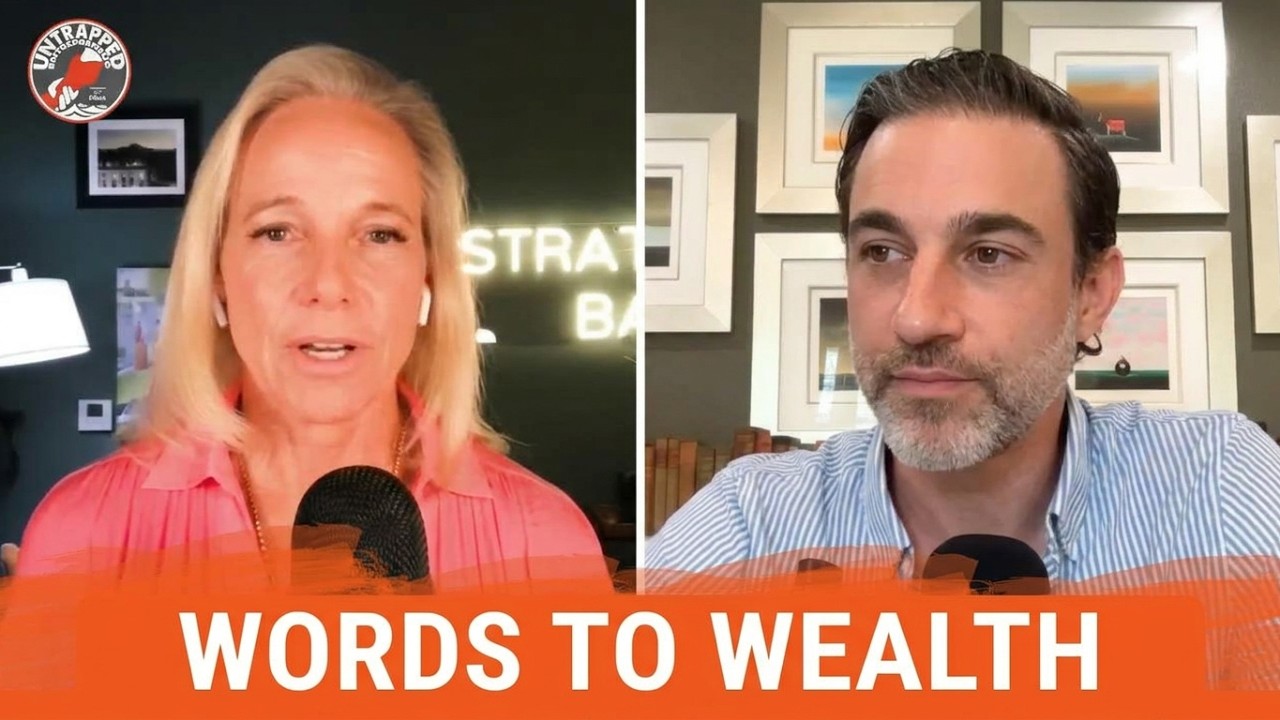
When something isn't working in a business, it's pretty easy to decide everything needs to change. New product. New team. Ten more things to sell. Aurora Winter made me stop and ask a much simpler question: what if people just don't understand the offer?
Aurora is an author, entrepreneur, and the creator of the Spoken Author Method. She came on the show with a story about seven words that she says brought in $3 million in sales in a week. That got my attention. But this conversation went well beyond a good sales pitch.
Same business. Different words.
Aurora's yacht business wasn't running out of ideas. It was running out of runway. She knew the offer made sense, but she was explaining it through tax details, depreciation, and all the things she understood about it. The customer had to work too hard to see what was in it for them.
Look, I'm a finance major. When she started talking about straight-line depreciation, even my brain hurt. I knew what it meant. I was just hoping we weren't going to spend the rest of the interview on it.
Then she found the line: “Five weeks of sun, fun and tax shelter.” Aurora calls that her seven-word message. She says the product, price, and team stayed the same. The message changed, and the sales followed.
That doesn't mean a clever sentence fixes a bad business. It means we shouldn't assume the business is broken before checking whether we're making the value clear. She still had the detailed explanation for the person's accountant. It just wasn't the first thing the customer needed to hear.
Are you explaining everything you know about your business, or giving someone a reason to ask you more?
When life knocks the wind out of you
Some traps have nothing to do with a bad hire or a missed revenue goal. Aurora lost her husband, who was also her business partner and the father of their four-year-old son. When we talked about what came next, her advice was to shorten the time frame and let people help.
If thinking about the next year feels impossible, think about today. If today is too much, think about the next hour. She wasn't offering some tidy formula for grief. She was sharing what helped her get through something she never wanted to face.
A friend eventually got her out of the house and to a gathering with people in film and television. A conversation about a screenplay she cared about opened a door. Later, she pitched it at the Banff Media Festival and began a new chapter in her work.
What I heard was a focus on what she could influence. Not pretending the loss was okay. Not having the whole future figured out. Just finding something she could do next, and not doing all of it alone.
More content doesn't help if there's less of you in it
AI makes it easy to put out more words. That doesn't automatically make those words useful, or make them sound anything like you. Aurora's advice was to get clear on your own stories, experiences, and point of view before trying to scale them.
She described working with an author whose manuscript was missing the very thing that made it worth reading: his own stories. In a conversation, those stories came out naturally. They just hadn't made it into the book.
I see a version of that with entrepreneurs. You have to dig a little, then you hear something and think, why isn't this out there? There's real experience there. But somehow the public version sounds like everybody else.
If you scale generic, you will destroy your brand.
That was Aurora's warning. She isn't against AI. Neither am I. But taking a generic message and sending it to a million people doesn't make it more personal. It just makes more of it.
Before making another post, I think it's worth asking: is this something I actually think? Is there a real conversation or experience behind it? Would anybody who knows me recognize me in it?
Use AI to get to the human part
The use of AI that made the most sense to me in this conversation was helping us get to a connection we couldn't have made as easily on our own. Find the right person. Organize the research. Help us prepare. Then have the actual conversation.
Aurora talked about combining those tools with something personal: a call, a book in the mail, a video made for someone. The technology can do a lot of the work around a relationship. That's different from handing it the relationship.
And we don't necessarily need to reach everybody. Aurora's point about fewer, more thoughtful messages stuck with me. A handful of people who really connect with what you're saying can matter a lot more than a whole lot of people scrolling past it.
At the end, we came back to freedom. That's a big part of why I became an entrepreneur in the first place. Being untrapped isn't about having everything figured out. It's having room to create your own path, make a difference, and still have a life outside the business.
So here's what I'd leave you with: before you decide you need more content, more reach, or a completely different business, take another look at the message. Does it sound like you? And does the person on the other end have a reason to care?