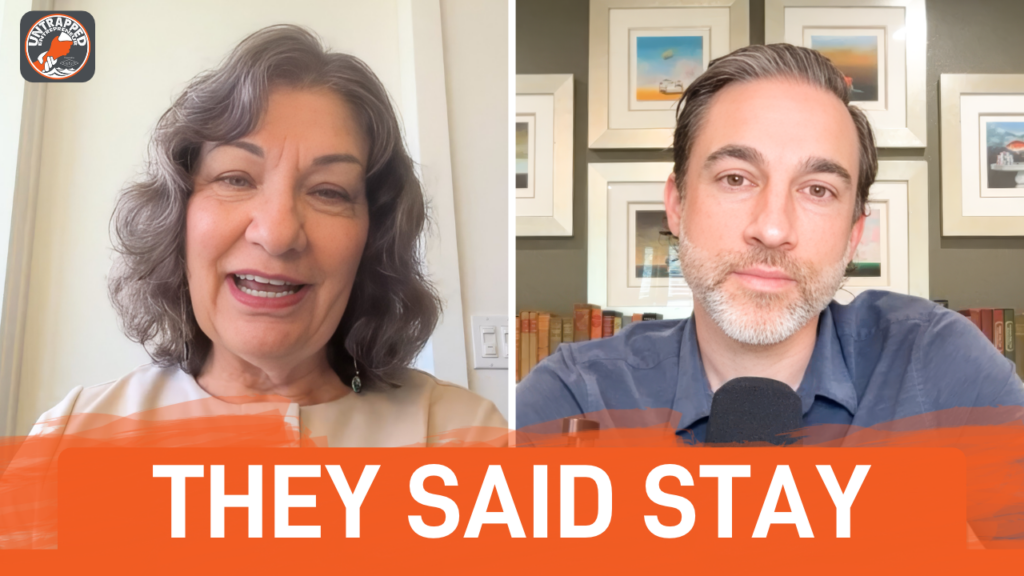
Kay M. Perrin on protecting your income, becoming a beginner again and taking the first small step toward a different kind of work.
Kay M. Perrin had been a nurse for 17 years when an opportunity to return to school came along. Her employer offered tuition support for a master’s degree or PhD. She was interested, but she had not been in a classroom for 20 years. She also had children at home and a paycheck she still needed.
She kept working and took one class. That gave her a way to find out whether she wanted the next chapter before leaving the current one. It eventually led to teaching and academic leadership in public health.
For an entrepreneur who feels stuck in work they no longer enjoy, there is something useful in that approach. You can explore a different direction without making your first move the biggest possible commitment.
Find a small way to test the work
Kay encourages people to try the thing they are considering while they still have income coming in. If you want to paint, take on a few jobs or bring your work to an art show. Find out what doing the work feels like and whether people want what you are offering.
In our conversation, I mentioned an artist who kept selling real estate while he developed his art. Selling some of his work helped him build the confidence to make the transition. Kay’s experience followed a similar pattern: she started teaching as an adjunct while she was still nursing.
Your first experiment should answer a real question. Do you enjoy the work after the novelty wears off? Can you make time for it? What will people pay for? Keep track of what you learn before deciding how much more to commit.
Let yourself be a beginner
Being experienced in one field does not make starting another comfortable. Kay remembers feeling intimidated in classes with younger students. She asked people which course to take next and sought advice from people who had already tried what she wanted to do.
Years later, she faced the same problem in a different form. She had written five textbooks, but fiction required skills she had not learned. Her granddaughter’s boyfriend had studied creative writing. She asked him to teach her dialogue and edit her work. That relationship helped her get through three novels.
Ask someone who knows the work where beginners tend to get stuck. Ask someone who struggled what they would do differently. Make room for honest feedback. Your past experience can help you learn, even when it cannot supply the answer.
Make the next step small enough to repeat
Kay’s writing advice is practical: start with what you know and write something every day. Some days that may only be a sentence or a paragraph. She also uses a storyboard to keep track of where a story has been and where it is going.
There is a useful business application here. Choose a small action that keeps you engaged with the idea: talk to a potential customer, do a sample project or spend a short block of time learning a missing skill. Decide what you need to learn next, then take that step.
Kay did not need to see every part of her future before taking the first class. You do not need to know every part of a new business before testing whether it fits. Protect the responsibilities you have today, get closer to the actual work and let what you learn shape the next decision.